Chapter four · Safety and access
Everyone Gets In, Everyone Gets Home
Safety work is invisible when it succeeds. Nobody posts about the fire exit that was clear, the quiet room that was available or the volunteer who noticed someone struggling. Do it anyway. It is the job.
Gaming communities are often built by people who found belonging online when physical spaces did not welcome them. Bringing those communities into a room is a privilege and a responsibility. Your attendees include teenagers on their first trip alone, disabled players, people who are anxious in crowds, and creators who have experienced harassment. Everything in this chapter exists to honour their trust.
Write the code of conduct first
Publish your code of conduct on the same day you announce the event. Make it specific: what behaviour is not acceptable, how to report a problem, who responds, and what consequences follow. PAX built much of its reputation on a clear harassment policy and visible staff who act on reports. Organisations such as the Fair Play Alliance have published useful thinking on healthy player behaviour that translates well to physical spaces.
Then train your volunteers on it. A policy nobody knows how to enforce is a press release, not a policy. Every volunteer should know how to receive a report calmly, where to escalate, and never to promise confidentiality they cannot keep.
A code of conduct is a promise. Your volunteers are the people who keep it.
Crowd safety and the plan on paper
Write an event safety plan with your venue's safety officer. Cover maximum occupancy for each space, entry and exit flow, first aid, fire evacuation, lost children or vulnerable adults, severe weather and power failure. In the UK, many organisers use the Purple Guide as a reference; in the United States, the Event Safety Alliance publishes practical guidance; ISO 20121 offers a framework for sustainable event management. In France, larger public gatherings involve the local prefecture and venue safety commissions, so involve the venue early.
Hire licensed security where required, and brief them on gaming culture. A guard who understands that cosplay props, loud cheering and late-night tournaments are normal will make better judgement calls than one who treats every foam sword as a weapon. Publish your prop policy clearly well before the event.
Welfare is a team, not a tent
LAN events and overnight marathons have their own risks: exhaustion, dehydration, skipped meals and people who have not slept in thirty hours. Provide free water, affordable food, and a visible welfare point staffed by people trained in basic mental health first aid. Charities such as Take This work specifically on mental health in games culture and are a good source of guidance.
Offer a quiet room with dimmed lights and no screens. Announce it, signpost it, and keep it genuinely quiet. It will be used more than you expect.
Accessibility from the floor plan up
Accessibility is a design decision, not an afterthought. Check step-free access to every space including stages, toilets and the BYOC hall. Keep aisles wide enough for wheelchairs between table rows. Reserve seating near stages with clear sightlines, and offer captioning on main-stage streams and screens. Publish an accessibility statement that tells people exactly what to expect, including surfaces, distances, lighting and noise levels.
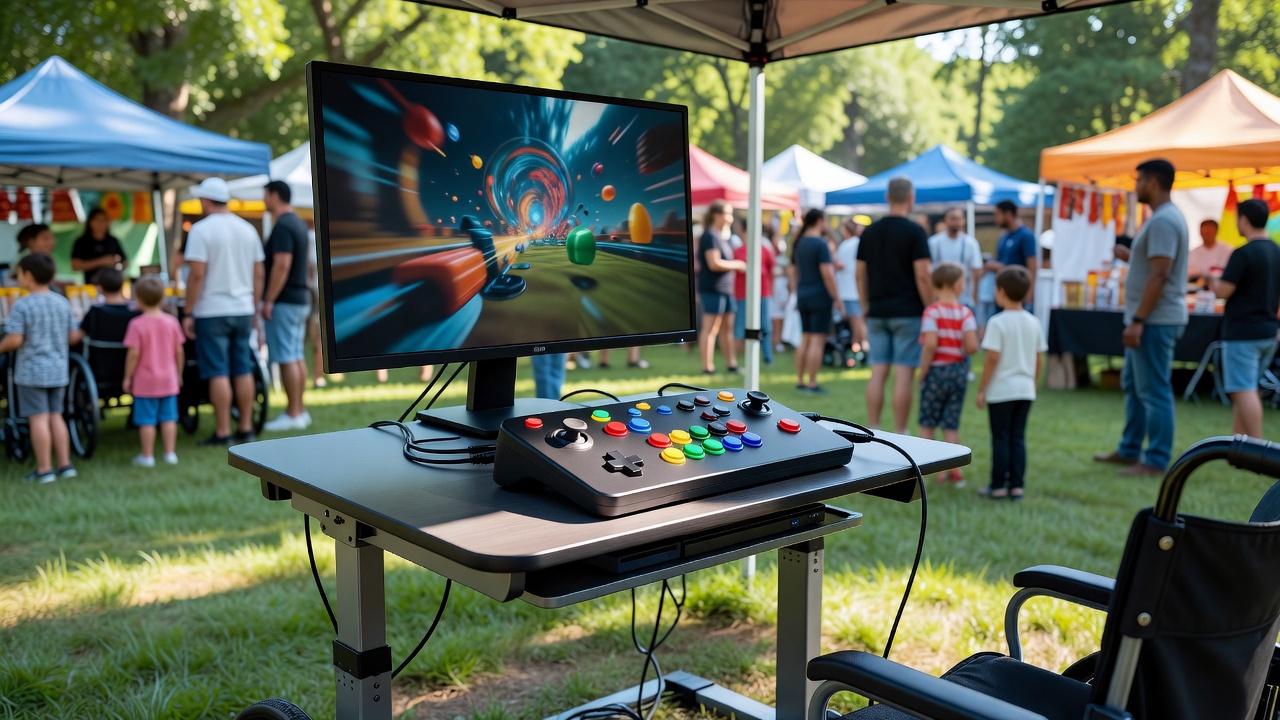
Make play itself accessible. Charities such as AbleGamers and SpecialEffect advocate for, and help set up, adaptive gaming. Hardware like the Xbox Adaptive Controller and PlayStation's Access controller exists precisely so that more people can join in. A free-play station featuring adaptive setups sends a clear message about who belongs.
Ticketing matters too. Offer companion tickets for attendees who need a carer, and let people request accommodations privately at purchase.
Getting everyone home
The event does not end when the lights go up. Publish late-night transport options, check that last trains and buses match your closing times, and keep the welfare point open until the hall is empty. For younger attendees, require a contact adult and set clear rules for overnight areas.
Afterwards, ask attendees how safe and welcome they felt, separately from whether they enjoyed the programme. Read the answers carefully. They are the most important part of your debrief, and the best starting point for next year's twelve-month runway.